While visiting Chinatown, my cousin and I stopped by Molly Tea, a popular Chinese tea chain with locations around the world, including the United States. As we waited for our tea order, my cousin told me about the controversy surrounding the franchise. Our conversation turned to trademark law, which protects source-identifying words, phrases, symbols, or designs. She explained that the luxury fashion house Louis Vuitton sued Molly Tea in a Chinese court. Louis Vuitton alleged that Molly Tea’s logo infringed several of its registered trademarks. In June 2026, the Chinese court sided with Louis Vuitton and awarded approximately $1.5 million in damages and legal expenses. Molly Tea indicated that it planned to appeal.
What caught my attention wasn’t just the million-dollar judgment but rather the controversy surrounding the Louis Vuitton marks themselves. Both Louis Vuitton’s registered marks and Molly Tea’s logo feature a four-petal flower. Critics of the decision pointed out that similar floral motifs have appeared in traditional Chinese art for centuries, predating Louis Vuitton’s use. This raised questions about whether a company should be able to claim exclusive trademark rights over culturally significant imagery. Although the dispute arose in China, I wondered: Under U.S. trademark law, can a company trademark a design derived from a traditional cultural symbol? Even if the law permits it, should it?
U.S. trademark law protects distinctive designs that identify the source of goods or services. This suggests that a company may protect a distinctive version of a traditional symbol. However, that does not mean the company? owns the underlying cultural imagery. This post explores how a U.S. court might evaluate Louis Vuitton’s trademark claims against Molly Tea. It also considers how trademark protection should preserve recognizable brand designs without restricting others from drawing on shared cultural traditions.
A Flower with a Much Older History
Louis Vuitton’s famous monogram was introduced in 1896 and features recognizable design elements such as its interlocking initials and three floral motifs. Over time, these designs have become closely associated with the luxury brand.
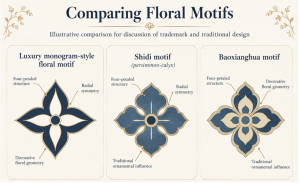
Following the Molly Tea decision, Chinese commentators pointed to similarities between the fashion house’s floral designs and traditional Chinese ornamental patterns, including shi-di, a persimmon-calyx motif, and baoxianghua, a stylized floral pattern found in historical Chinese decorative art. Such motifs have appeared in architecture, textiles, and other artistic traditions for centuries.
These similarities raise broader questions about the limits of trademark protection. If a company builds commercial recognition around a traditional motif, should it then be permitted to prevent others from using similar imagery? What if those similarities originate from a shared cultural tradition?
Can You Trademark Tradition?
According to federal trademark law, trademarks serve to identify the source of goods or services and distinguish them from those offered by others. A company does not need to invent something new before it can receive protection.
A familiar design (or word) can serve as a trademark when consumers come to associate it with a particular company. This concept, known as secondary meaning or acquired distinctiveness, means that even a common design has become recognizable as identifying a particular brand.
For example, traditional Chinese motifs like shi-di and baoxianghua demonstrate that similar floral designs existed long before this fashion brand introduced its logo. However, Louis Vuitton’s combination of lines, proportions, and other design features has become recognizable to consumers as identifying its products. That distinction matters because trademark protection extends to the source-identifying design, not necessarily to every similar flower.
So, what if Louis Vuitton had sued Molly Tea in the United States? Louis Vuitton could argue that the logos are similar enough that consumers might mistakenly assume Molly Tea is affiliated with, sponsored by, or collaborating with Louis VuittonIn evaluating this argument, a court uses several factors. These include the similarity of the designs, the strength of Louis Vuitton’s trademarks, and any evidence of actual consumer confusion about sponsorship. Even if consumers understand that Molly Tea makes the drinks, they may mistakenly believe that Louis Vuitton sponsored or authorized a collaboration with the tea chain. A U.S. court could therefore reach a result similar to the Chinese court’s decision, but that outcome would not be automatic. Rather, it would depend on whether the evidence established a likelihood of confusion about sponsorship.
Where Branding Ends and Culture Begins
U.S. trademark law does not broadly protect cultural symbols from commercial use.Section 2(a) of the Lanham Act can, however, bar registration of a mark that falsely suggests a connection with a person, institution, belief, or national symbol. This can occur when a trademark causes consumers to believe that a certain person or organization is associated with a product when no actual connection exists. For example, in In Re Shinnecock Smoke Shop, a court upheld the refusal to register trademarks that falsely suggested a connection with the Shinnecock Indian Nation. The Nation qualified for protection as a person or institution under Section 2(a).
However, the law does not generally prohibit companies from adopting designs inspired by traditional cultural symbols. A company may therefore obtain trademark protection for a culturally inspired design even when its use raises concerns about cultural appropriation.
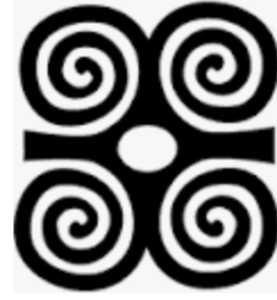
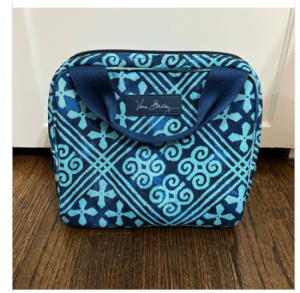
For example, Ghanaian Adinkra symbols have long conveyed cultural values and traditions through distinctive visual patterns. When a fashion company incorporates an Adinkra symbol into its branding, the commercial borrowing is already occurring. The further question is whether commercial recognition should allow a company to restrict others from using similar traditional imagery. Vera Bradley’s 2017 “Cuban Tiles” print featured repeating spiral patterns resembling Dwennimmen, an Adinkra symbol representing strength and humility. The symbol’s curled, horn-like shapes appeared throughout Vera Bradley’s blue-and-white geometric design. Yet the print’s name referenced Cuba rather than Ghana, raising questions about how culturally significant imagery can be repurposed without acknowledging its origins. Although this example illustrates cultural borrowing, it does not establish that Vera Bradley obtained trademark protection for the pattern or tried to restrict others from using the traditional symbol.
This concern is especially important because trademark rights can potentially last indefinitely. If protection extends too broadly, companies could effectively gain control over cultural imagery that existed long before their brands by preventing others from using similar traditional designs. On the other hand, labeling a design “traditional” should not give competitors permission to copy another company’s recognizable trademark. Businesses have legitimate interests in protecting the distinctive designs they have developed and the consumer recognition associated with them. That interest includes preventing uses of their distinctive designs that could confuse consumers about the source or sponsorship of goods or services.
The challenge, therefore, is finding the appropriate boundary between protecting commercial identity and preserving cultural expression. A reasonable approach would allow companies to protect the distinctive elements of their trademarks while keeping the underlying traditional imagery available for others to use. That imagery should remain available to people both within and outside the culture from which it originated. This would protect consumers from misleadingly similar marks without giving companies broad control over symbols that belong to a shared cultural tradition. The Louis Vuitton–Molly Tea controversy illustrates a tension that extends beyond two companies and their floral logos. The real question is not whether Louis Vuitton can trademark a flower, but how much of that flower trademark law should allow Louis Vuitton to call its own.

Negien Rad
Associate Blogger
Loyola University Chicago School of Law, J.D. 2028