An Unexpected Introduction to Intellectual Property
When I began working for Chevron, I imagined my work would focus solely on explaining the technical complexities of oil, gas, and energy to clients. That expectation began to shift when I worked on an assignment involving a new and patented motor oil and became curious about the patent protecting it and its purpose. I didn’t expect my path to so quickly intersect with the legal field, specifically intellectual property [“IP”]. Nor did I expect that my experience with patents would lead me to change careers and pursue law school. What began as curiosity about the technology behind a new product became an unanticipated entry point into the world of intellectual property law.
More Than Just a Patent
When my job at Chevron placed me at the forefront of launching a new market-changing oil, my previous assumption about a technologically stagnant industry quickly changed. I worked in the fuel and lubricants division, where my role consisted of understanding all the lubricants and oils sold on a very technical level in order to drive sales through clients and distributors. One of those lubricants was a newly developed heavy-duty engine oil that Chevron had patented. I was used to thinking about products from an engineering perspective, focusing on how they worked and why they performed the way they did. However, I had never really considered the legal protections surrounding the technology behind them.

Out of genuine curiosity, I requested to read components of this groundbreaking engine oil, since the world of patents and IP was something I had little familiarity with. As I read through it, I became especially interested in how the technical details of the product were translated into legal protections. I found myself wondering what distinguished a patentable innovation from an ordinary product improvement and how the company determined which aspects of the technology were worth protecting. I was so fascinated by reviewing the patent that I asked my supervisor if I could join legal calls regarding what could and couldn’t be disclosed about the new oil to clients.
Outside of work, I began to explore intellectual property and patents more deeply. I learned more about how patents protect inventions and how those protections can influence the way companies introduce new technologies into the market. I spoke with attorneys who primarily worked in IP at Chevron, did research on how patents protect inventions, and read a book written by engineers who transitioned their careers into law and what their day to day looked like.
Rethinking Innovation in Energy
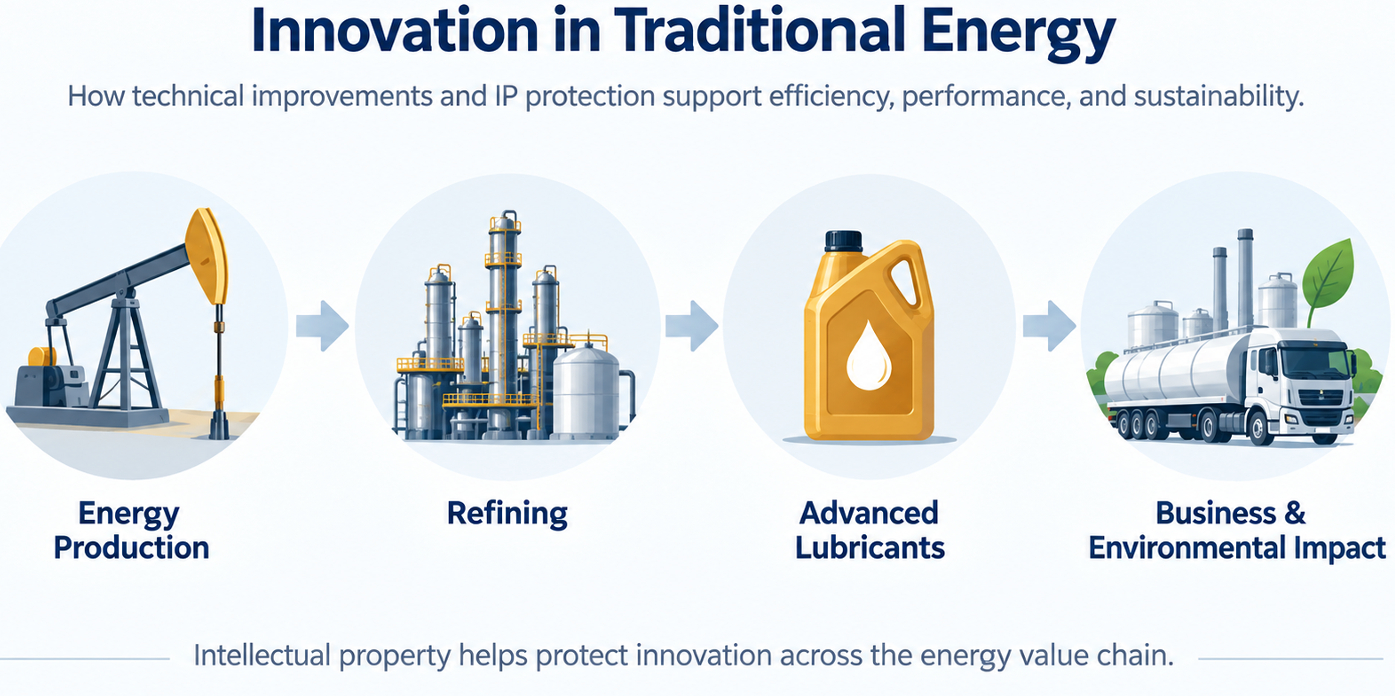
The energy sector as a whole also still offers significant opportunities for advancement and is not limited to just renewables. My experience showed that traditional energy industries also continue to evolve in meaningful ways. Working with the new engine oil gave me a firsthand example of how advancement in this sector can develop from improving existing technologies. The patented motor oil chemical formulation allowed larger vehicles to operate more efficiently and for longer periods while being more environmentally friendly. These innovations matter because even small improvements can make significant impacts such as helping companies reduce waste, improve efficiency, or lower overall costs. From proprietary chemical formulations to drilling technologies to the ideas that intertwine throughout every aspect of the oil industry, IP protects innovations that incentivize continued improvement throughout the oil industry. Seeing how technological advancement and legal protection worked together in a technical industry fundamentally changed my understanding of both the energy sector and the role of IP law.
More on the different industries of the oil field
Protecting Progress
In an industry that is often seen as taboo from an environmental perspective and at the center of controversy in foreign politics, seeing it as a field of opportunity for innovation can sometimes be difficult. However, my experience with the patented oil showed me how IP can give corporations an incentive to improve existing technologies and inventions, and further progress society. The new product that I helped introduce to clients was a new chemical formulation that allowed larger vehicles (like big trucks) to operate more efficiently for longer periods of time and reduce the waste associated with their operation. Seeing a patented innovation create measurable improvements in an established industry helped me understand why protecting new ideas matters. Knowing that I played a role in introducing a new idea to clients gave new meaning to my work and evoked a new interest in contributing to technological progress. Instead of working only on purely the business side of innovation, I became increasingly interested in the legal protections that allow those advancements to be possible. The patent was not simply a legal document surrounding the product. It represented the value Chevron placed on innovation and its willingness to continue investing in technological advancement.
Contributing to an environment where people’s technological advancements are protected helps individuals think, create, and explore new possibilities. Working alongside legal counsel as an engineer showed me the important role the legal profession plays in advancing inventions and navigating new insights. Through discussions with legal counsel about what information surrounding the new engine oil could be disclosed, what needed to remain confidential, and how to optimize patent protection, I saw how legal counsel supported the product by protecting the innovation behind it
What interests me most about IP law is how it not only safeguards technological advancements, but it also helps companies distinguish their products and remain competitive in the market. I saw this firsthand when Chevron’s patented motor oil allowed the company to protect its idea while attracting new customers to a product its competitors could not offer. As industries continue to evolve alongside the global transition toward more sustainable and efficient energy solutions, my experience showed me how IP plays a critical role in encouraging investment and fostering continued progress.
From Curiosity to a Career in IP
As I learned more about intellectual property, I realized that the curiosity sparked by one patent surpassed that single experience. Speaking with an attorney and reading an IP book for engineers broadened my understanding of how the field extends beyond patents and also includes trademarks, copyright, and trade secrets. Learning about the broader reach of intellectual property further strengthened my interest in the field and showed me how many different ways the law can shape and protect innovation.
As I continue my legal education, I hope to deepen my understanding and continue exploring the role intellectual property can play in encouraging innovation across industries. What began as curiosity about a single product has continued to shape the way I think about the relationship between technology, innovation, and the law. I look forward to continuing that exploration throughout my legal career.

Negien Rad
Associate Blogger
Loyola University Chicago School of Law, J.D. 2028