By: Maya Kelly
From the coffee cups tossed in dorm hall bins to the packaging left behind at campus events, our everyday waste choices ripple far beyond the recycling bin. Across the country, cities and universities are responding to the environmental impact of trash by introducing circular waste policies. These initiatives are reshaping how communities think about consumption, recycling, and composting, creating opportunities for practical action on campuses.
Understanding Circular Waste Policy
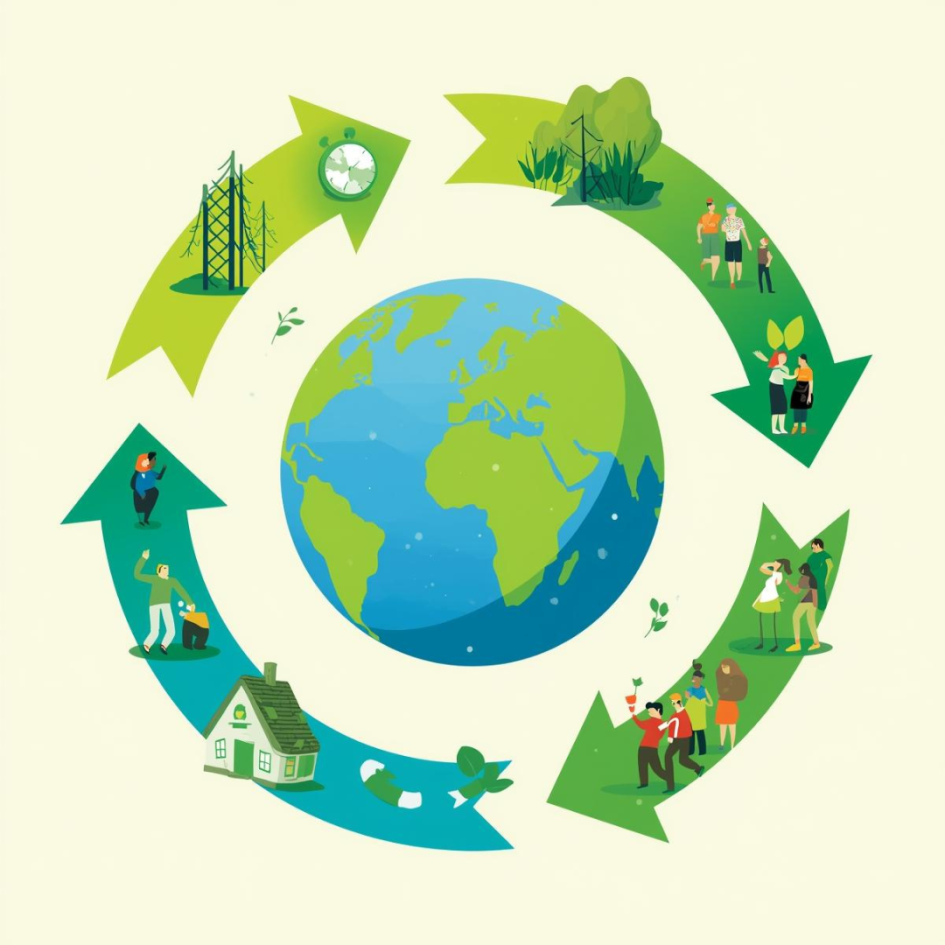
Circular waste policies aim to close the loop in our material economy. Rather than a linear “take-make-dispose” model, a circular approach emphasizes reducing, reusing, and recycling materials to the greatest extent possible.
Municipalities and states are codifying these principles through legislation that requires businesses, institutions, and residents to actively participate in waste diversion programs.
For example:
- California’s SB 1383 mandates the diversion of organic waste from landfills, requiring composting programs in residential, commercial, and institutional settings.¹
- The European Union Circular Economy Action Plan sets ambitious targets for packaging recyclability and material recovery, influencing supply chains globally, including in the U.S.²
These laws carry compliance obligations, penalties, and reporting requirements. For colleges and universities, meeting these standards may involve adjusting dining operations, planning events with zero-waste goals, and engaging students in hands-on sustainability programs.
Zero-Waste on Campus: Turning Policy into Practice
Many campuses are translating circular waste regulations into tangible initiatives:
Composting Programs: Dining facilities often have clearly labeled bins for food scraps and compostable materials. Some schools also offer workshops to engage students directly in composting.
Reusable and Refillable Systems: Coffee cups, water bottles, and takeaway containers are shifting from single-use to reusable systems. Incentives, such as discounts for using refillable containers, help integrate compliance with daily habits.
Material Recovery & Recycling: Beyond traditional recyclables, campuses are increasingly collecting e-waste, batteries, and textiles, often in collaboration with local recycling facilities or nonprofits. Extended producer responsibility initiatives hold manufacturers accountable for the lifecycle of their products, aligning campus programs with municipal policies.
Students are critical to the success of these programs. Peer-led sustainability groups, residence hall sustainability coordinators, and volunteer teams often conduct waste audits, run awareness campaigns, and organize zero-waste events. This ensures that compliance is not just a top-down policy but a community-driven practice.
Chicago and Loyola University Chicago: A Local Case Study
Chicago provides a real-world example of circular waste policy intersecting with campus sustainability. While the city does not yet require all commercial generators, including universities, to divert organic waste, recent initiatives make composting and organics diversion more accessible than ever.
- Expanded City Composting: In 2023, the City of Chicago launched its Food Scrap Drop-Off Program, allowing residents and campus communities to bring household food scraps to designated collection sites for composting.³ In 2025, ordinance SO2025-0018160 prohibited landlords and property managers from banning residents from composting, provided that compost is managed in enclosed, odor- and pest-controlled containers.⁴
- Partnerships for Compliance: Loyola University Chicago is actively advancing organics diversion through a combination of strategic partnerships and student-led programs. The Office of Sustainability collaborates with local waste management providers to ensure campus dining halls and events have clearly labeled composting bins and regular collection schedules. Students are directly involved in these efforts through initiatives such as the Compost Bucket Program or Wipe Out Waste series. Together, these collaborations provide meaningful opportunities for students to engage with sustainability policy while advancing Chicago’s broader environmental goals.⁵
By connecting local regulations with campus initiatives, students see the direct impact of policy on their daily lives and learn practical lessons in environmental stewardship.
Challenges and Opportunities
Implementing circular waste policies on campus comes with challenges:
- Contamination in recycling and compost bins can reduce effectiveness and violate local ordinances.
- Behavior change is difficult; students and staff must adopt new habits consistently.
- Resources are needed for bins, signage, and training.
Yet these challenges create opportunities:
- Engaging students in designing and running programs fosters ownership and community culture.
- Tracking and reporting diversion rates can be integrated into sustainability curricula or research projects.
- Campuses can serve as role models for local communities, demonstrating that compliance and sustainability are achievable and beneficial.
Looking Ahead: The Future of Campus Waste Management
The intersection of policy and campus sustainability is likely to deepen in the coming years. Emerging trends include:
- Mandatory reporting and transparency: More cities may require institutions to publicly report waste diversion rates.
- Integration with broader climate goals: Waste diversion contributes to greenhouse gas reductions and climate action commitments.
- Innovation in materials: Universities can pilot reusable packaging, compostable serviceware, and other circular economy solutions.
For students and staff, these changes offer an exciting opportunity to participate in a system that is both legally compliant and environmentally responsible. Every decision helps build the circular campus of the future.
Circular waste policies are not just regulations—they are catalysts for community engagement, sustainability education, and practical action on campus. By embracing these policies, students, staff, and universities can turn waste into opportunity, making every composted banana peel, reused container, and recycled paper sheet a meaningful step toward a sustainable, circular world.
References
- California Legislature. SB 1383. https://leginfo.legislature.ca.gov/faces/billTextClient.xhtml?bill_id=201920200SB1383
- European Commission. “Circular Economy Action Plan.” https://environment.ec.europa.eu/topics/circular-economy/circular-economy-action-plan_en
- City of Chicago. “Food Scrap Drop-Off Program.” https://www.chicago.gov/city/en/depts/dcd/supp_info/food_scrap_drop-off_program.html
- City of Chicago. Ordinance SO2025-0018160. https://www.chicago.gov/city/en/depts/dcd/provdrs/composting_regulations.html
- Loyola University Chicago. “Zero Watse.” https://www.luc.edu/sustainability/sustainabilityatloyola/loyolasustainabilityinitiatives/zerowaste/